
 Pin It
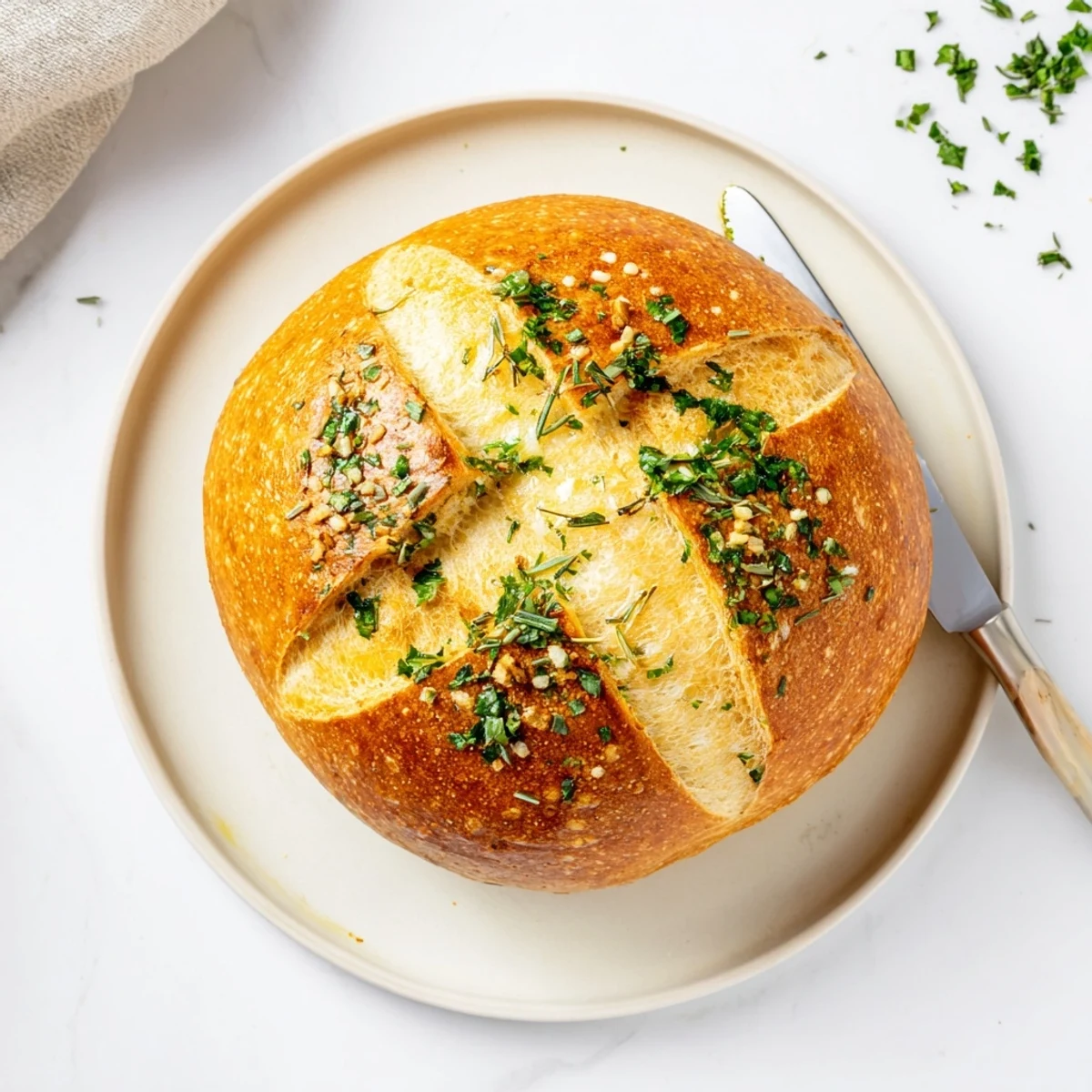
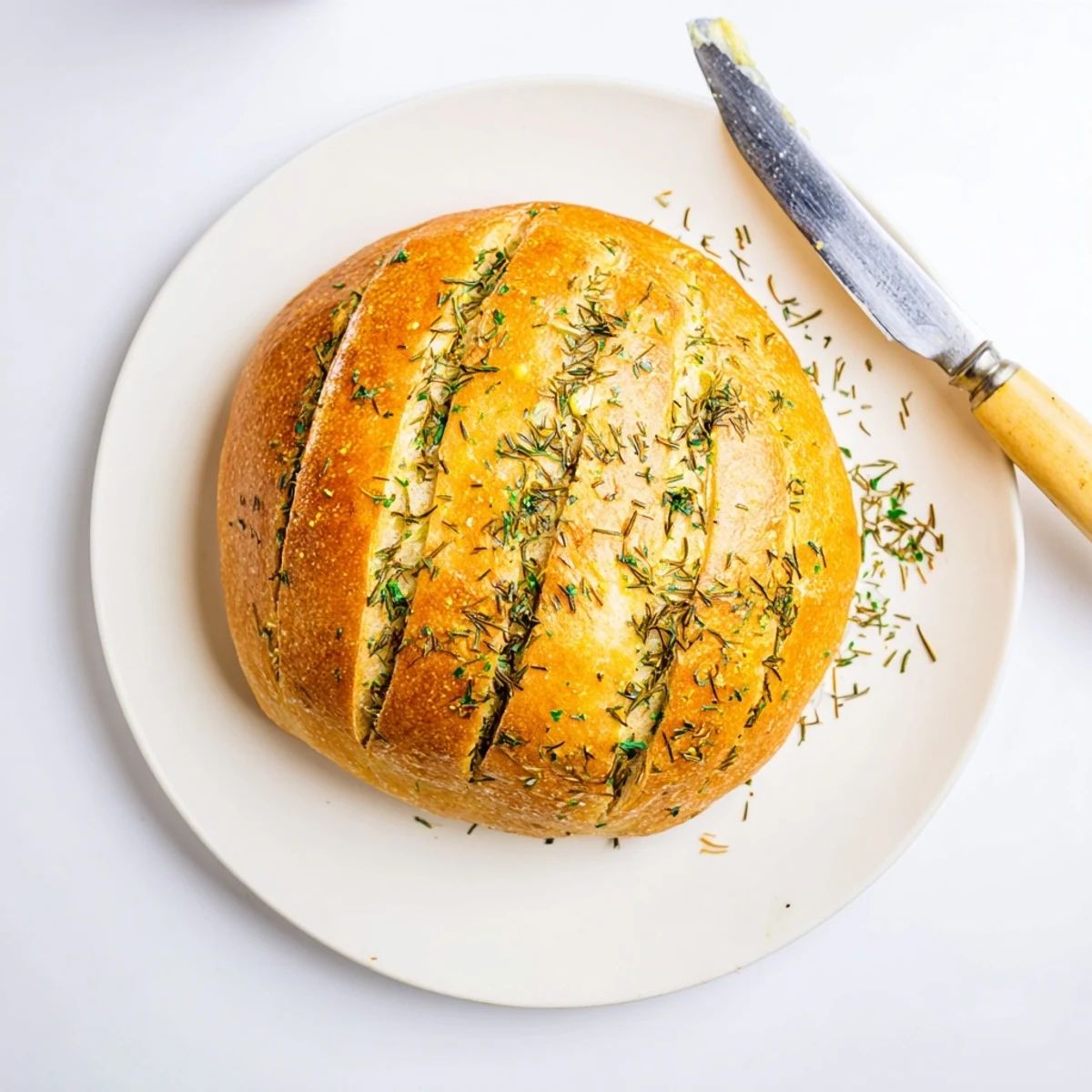
 This rustic loaf combines the convenience of no-knead preparation with the intense flavors of fresh garlic and aromatic herbs. The Dutch oven baking method creates professional bakery results at home, producing a crackly golden crust that encases a soft, pillowy interior perfect for dipping in olive oil or serving alongside hearty soups.
The dough comes together quickly with just a few staple ingredients, then transforms during a long fermentation that develops complex flavors and structure. Fresh rosemary, thyme, and parsley are woven throughout, while minced garlic adds savory depth that becomes fragrant during baking.
A final brush of melted butter right out of the oven adds richness and an extra herb garnish for beautiful presentation. This versatile loaf adapts easily to your preferences—swap in dried herbs, add grated Parmesan, or customize with your favorite flavor combinations.
The first time I made garlic bread in a Dutch oven, my entire apartment building smelled like an Italian bakery. My neighbor actually knocked on my door thinking I had ordered takeout from somewhere incredible. That smell of roasting garlic and herbs hitting the hot cast iron is something no restaurant can replicate.
I started making this bread every Sunday during winter when fresh warm bread felt like the only thing worth leaving my blanket fort for. My roommate began timing her afternoon coffee to when the bread would come out of the oven. Now even thinking about that crackling crust sound makes my kitchen feel complete.
Ingredients
- Bread flour: The higher protein content creates that beautiful chewy texture and structure that holds up to all those aromatic additions
- Active dry yeast: Make sure your water is warm to the touch like a baby bath not hot or it will kill the yeast before it can work its magic
- Garlic cloves: Fresh minced garlic distributes better than powder and roasts gently inside the dough as it bakes
- Fresh rosemary thyme and parsley: These herbs maintain their flavor through the high heat baking process unlike more delicate herbs like basil
- Olive oil: Keeps the dough tender and adds that subtle Mediterranean richness that pairs perfectly with garlic
- Melted butter: Brushing the finished loaf adds a glossy finish and an extra layer of savory flavor that makes the crust irresistible
Instructions
- Mix the base:
- Combine bread flour salt and sugar in your largest bowl then stir in the yeast until everything looks like one happy mixture
- Build the dough:
- Pour in the warm water and olive oil then stir with your wooden spoon until a rough sticky dough comes together
- Add the aromatics:
- Fold in the minced garlic and all those chopped fresh herbs until theyre evenly distributed throughout the dough
- Let it rise:
- Cover the bowl with plastic wrap or a clean damp towel and walk away for about 2 hours until the dough has doubled in size
- Shape the loaf:
- Turn the dough onto a lightly floured surface and gently tuck the edges underneath to form a round ball
- Rest again:
- Place your shaped dough on parchment paper cover loosely and let it rest for 30 minutes while you preheat your oven
- Preheat like a pro:
- Put your Dutch oven with its lid on into the oven and heat to 450F for at least 30 minutes getting it seriously hot
- Transfer safely:
- Carefully lift the parchment paper with the dough and lower it into the blazing hot Dutch oven
- Score and bake covered:
- Use a sharp knife to cut a shallow slash across the top then cover with the lid and bake for 30 minutes
- Finish uncovered:
- Remove the lid and continue baking for 15 to 20 minutes until the crust is deep golden brown
- The final touch:
- Brush the hot loaf with melted butter and sprinkle with extra herbs then let it cool before you slice into it
 Pin It
 This bread became my go to contribution to dinner parties after I brought it to a friends potluck and someone actually asked where I bought it. Watching peoples faces when they tear into that crackling crust and get hit with the garlic aroma is better than any compliment I could receive.
The Dutch Oven Secret
Dutch ovens are essentially mini steam ovens that create professional bakery results at home. The heavy cast iron holds heat while the lid traps moisture from the dough creating steam. This steam keeps the crust soft initially allowing the bread to expand fully before the crust sets in that gorgeous golden crunch.
Herb Variations That Work
While the classic garlic rosemary thyme parsley combination is timeless I have discovered some amazing variations. Try adding sun dried tomatoes and basil for a more Mediterranean vibe or go with caramelized onions and sage for something deeper and more savory.
Making It Your Own
This recipe is incredibly forgiving and adaptable once you understand the basic technique. The dough hydration ratio works beautifully with different flavor profiles and mix ins from cheeses to nuts to seeds.
- Swap in whole wheat flour for up to half the bread flour for a nuttier taste and heartier texture
- Adding shredded parmesan or asiago to the dough takes this from great to absolutely extraordinary
- Extra garlic is never wrong in my book just do not blame me if people keep their distance for a few hours
 Pin It
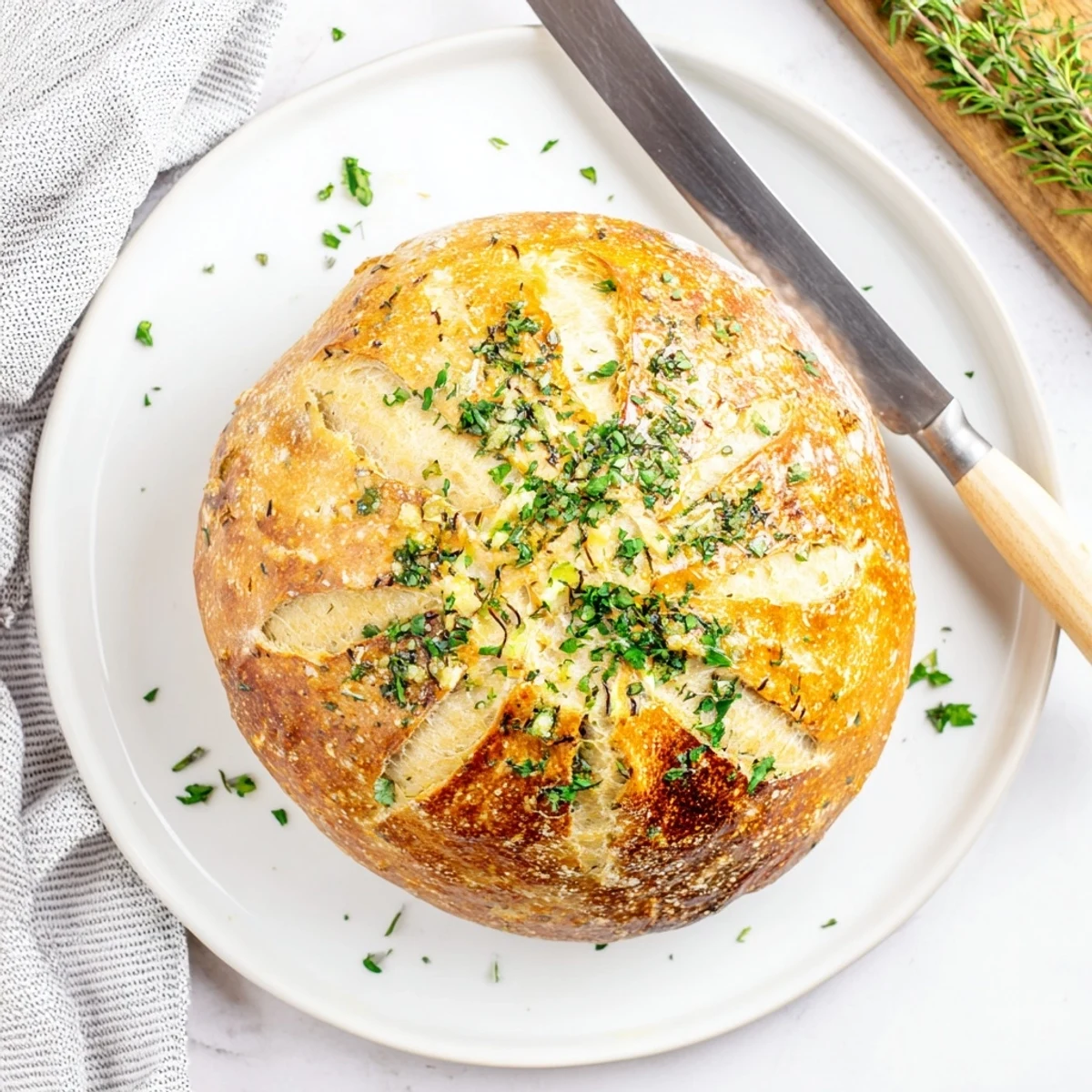
 There is something profoundly satisfying about pulling a loaf of bread from the oven that you created with your own hands. May your kitchen always smell like garlic herbs and the warmth of home.
Recipe Questions
- → Can I use dried herbs instead of fresh?
-
Yes, substitute dried herbs using one teaspoon each of rosemary, thyme, and parsley. The flavor will be slightly more concentrated, so you may want to reduce the amount slightly to taste.
- → What size Dutch oven works best?
-
A 4 to 6-quart Dutch oven is ideal for this loaf. The space allows the dough to expand properly while creating the steam needed for a crispy crust. Any oven-safe pot with a tight-fitting lid will work.
- → Why is the dough so sticky?
-
The hydration level in this dough creates that signature open crumb and chewy texture. Resist adding more flour—use wet hands or a floured surface when handling. The stickiness decreases during the rise and shaping process.
- → Can I add cheese to the dough?
-
Absolutely! Mix in ½ to 1 cup of grated Parmesan, cheddar, or Asiago with the herbs. The cheese melts throughout, creating savory pockets and adding extra richness to every slice.
- → How should I store this bread?
-
Wrap the cooled loaf tightly in plastic or store in a bread bag at room temperature for up to 3 days. For longer storage, slice and freeze in a resealable bag—toast individual slices straight from frozen.
- → Can I make this without a Dutch oven?
-
While the Dutch oven creates the best crust, you can use a baking stone or heavy baking sheet. Create steam by placing a pan of hot water on the bottom rack while baking. The results will still be delicious.