
 Pin It
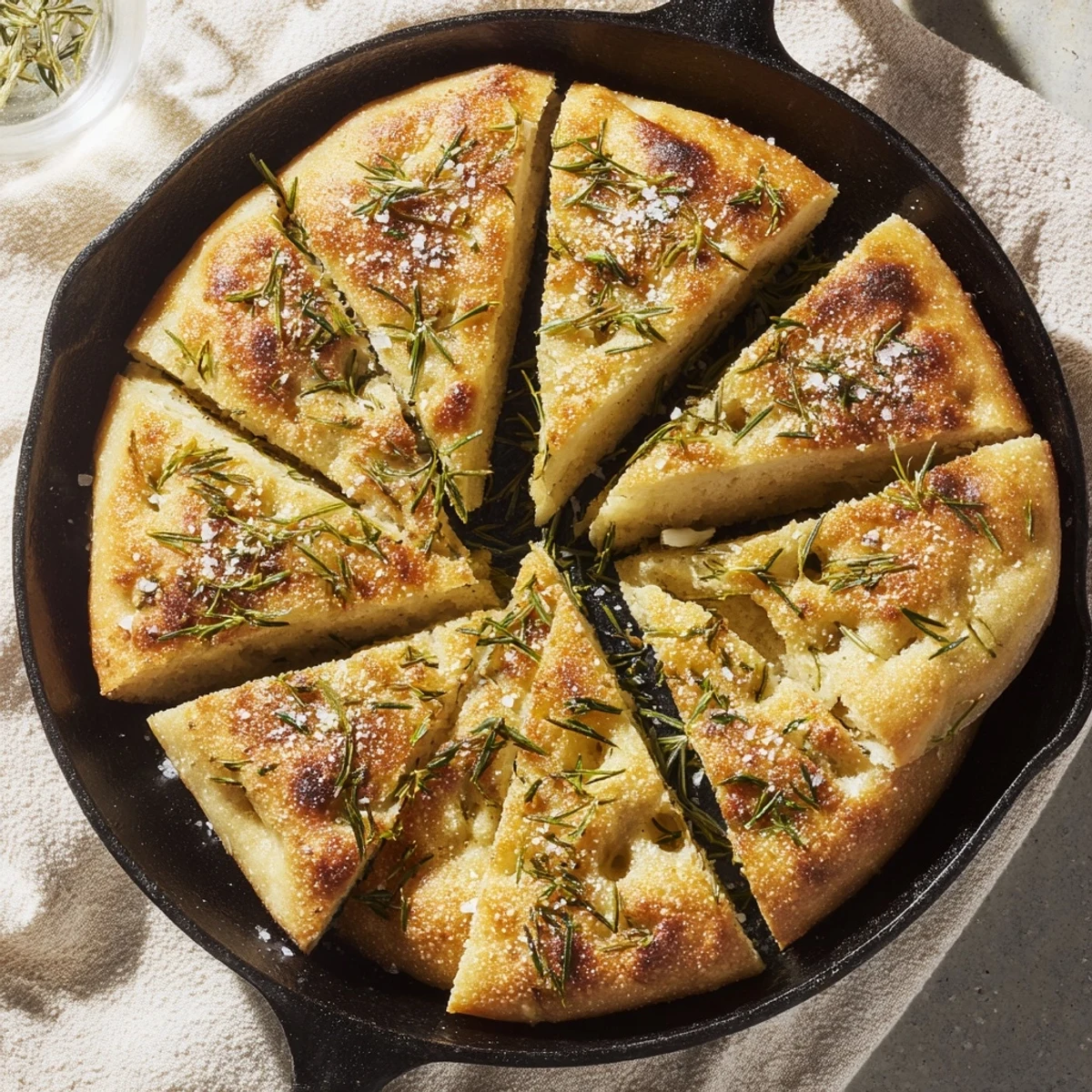
 This rustic skillet bread combines the comforting warmth of homemade dough with aromatic roasted garlic and fresh rosemary. Baked in a cast-iron skillet, it develops golden, crispy edges while maintaining a tender, chewy interior. The two-hour process includes rise time, but active preparation takes just 15 minutes. Perfect alongside soups, stews, or for dipping in quality olive oil. The flaky sea salt topping adds a satisfying crunch that complements the earthy herbs and sweet roasted garlic.
Last winter, when my kitchen was too cold to proof dough properly, I started baking bread in my cast iron skillet just to capture and hold that precious heat. The crust came out extraordinary and suddenly every dinner conversation centered around what was in that bubbling, aromatic pan on the table.
My sister-in-law took one bite and immediately asked for the recipe, then proceeded to eat three slices standing right at the counter. Now she makes it every Sunday and her family has officially nicknamed it that bread.
Ingredients
- Bread flour: Higher protein content than all-purpose gives you that satisfying chewy crumb structure
- Active dry yeast: Make sure your water feels like bath temperature, around 105°F, or the yeast will stay stubbornly asleep
- Fresh rosemary: Dried herbs work in a pinch, but fresh needles release their oils into the dough as it bakes
- Garlic cloves: Roast them first for a mellow sweetness, or add raw for that punchy kick that lingers
- Olive oil: Use the good stuff here since it carries directly into the final flavor
- Flaky sea salt: The finishing touch that makes every other ingredient sing
Instructions
- Wake up the yeast:
- Whisk warm water and yeast in a large bowl, then walk away for five minutes and look for that satisfying foam on top.
- Build your dough:
- Add flour and salt, mix until shaggy, then knead by hand or mixer for 5 to 7 minutes until it feels smooth and slightly tacky.
- Infuse with flavor:
- Drizzle in olive oil, chopped rosemary, and minced garlic, then knead just enough to distribute everything evenly.
- First rise:
- Transfer dough to a greased bowl, cover with a damp towel, and let it rest in a warm spot for about 1 hour until doubled.
- Shape the loaf:
- Generously oil your 10-inch oven-safe skillet, press the dough gently to the edges, and let it rise again for 25 to 30 minutes.
- Prepare for the oven:
- Preheat to 425°F, brush the top with remaining olive oil, and scatter flaky salt across the surface like snow.
- Bake until golden:
- Slide the skillet into the oven and bake for 30 to 35 minutes until the top is deep golden and the bottom sounds hollow when tapped.
 Pin It
 Something magical happens when you place a warm loaf on the dinner table. Even quiet evenings become conversations, and suddenly everyone remembers they are actually hungry for seconds.
Getting The Perfect Rise
Dough needs warmth and patience to develop those beautiful air pockets. If your kitchen runs cool, the proofing time will extend, and rushing this step results in dense bread rather than the airy crumb you are after.
Skillet Selection Matters
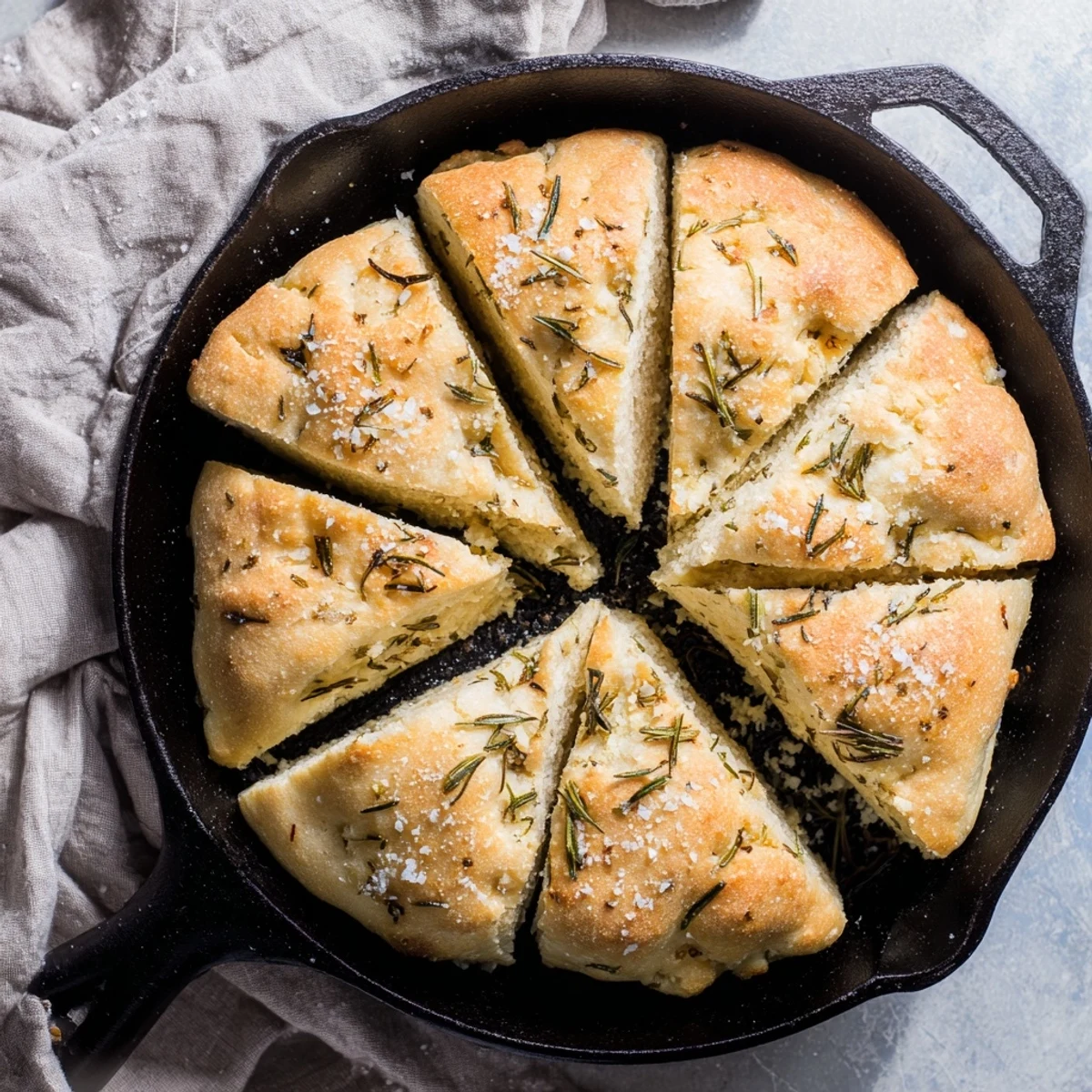
Cast iron holds heat beautifully and creates those signature crispy edges that make this bread special. Any oven-safe 10-inch skillet will work, but heavy pans conduct heat more evenly.
Serving Suggestions
This bread disappears fastest when served alongside soups or simply torn and dipped in good olive oil. The rosemary and garlic flavors are bold enough that the bread stands alone as a starter, yet subtle enough to complement almost any main course.
- Tear off chunks while still warm for the ultimate comfort experience
- Leftovers make excellent panini bases the next day
- Freeze wrapped slices and reheat in the oven for 10 minutes
 Pin It
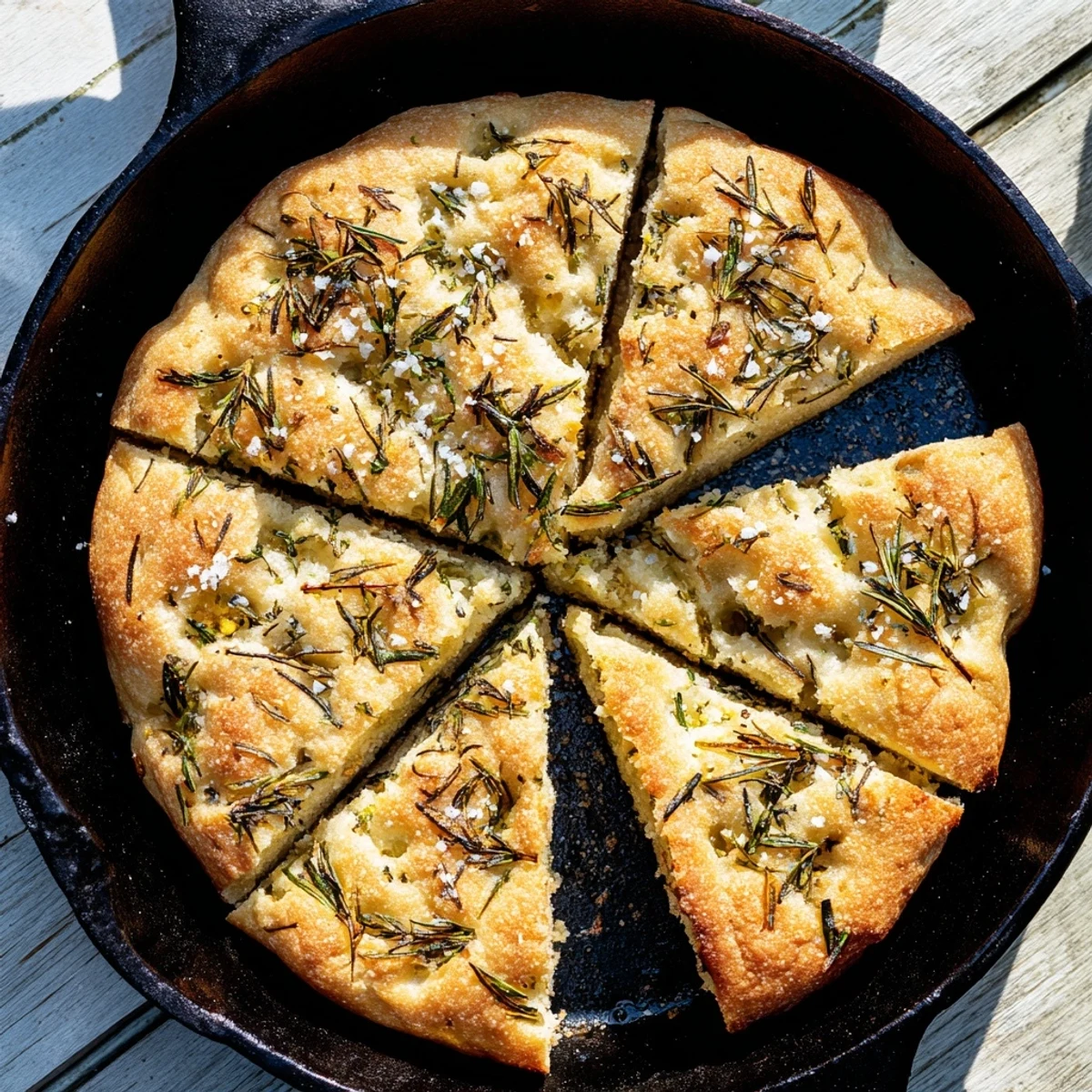
 There is something deeply satisfying about making bread that looks impressive but requires almost no special skill. Your kitchen will smell incredible, and that might just be the best part.
Recipe Questions
- → What makes skillet bread different from oven-baked bread?
-
Skillet bread bakes in a preheated cast-iron pan, creating crispy edges and a golden bottom crust while the steam trapped inside keeps the crumb tender and chewy.
- → Can I use dried rosemary instead of fresh?
-
Yes, use 1 teaspoon dried rosemary instead of 2 tablespoons fresh. Add it early to rehydrate in the dough for better flavor distribution.
- → Should I roast the garlic first?
-
Raw garlic works well, but roasting cloves until golden before adding creates sweeter, milder flavor that permeates the entire loaf.
- → How do I know when the bread is done?
-
The bread should sound hollow when tapped on the bottom, have deep golden color, and reach an internal temperature of 200°F (93°C).
- → Can I make this gluten-free?
-
This rustic style relies on gluten structure. Gluten-free substitutions won't achieve the same texture—consider a dedicated gluten-free flatbread instead.
- → How should I store leftovers?
-
Wrap tightly in plastic or store in an airtight container at room temperature for 2 days. Reheat in a 350°F oven for 10 minutes to restore crispiness.