
 Pin It
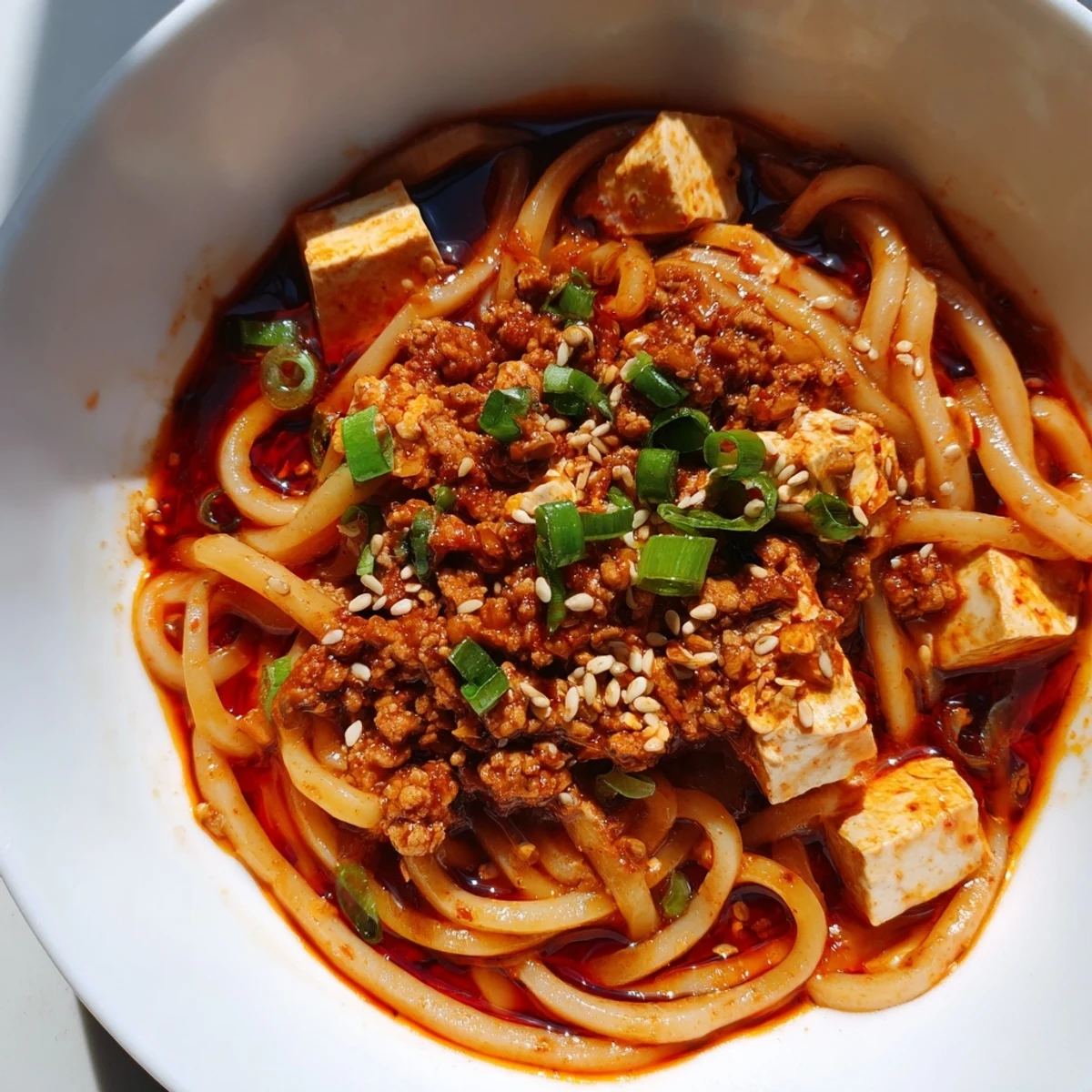
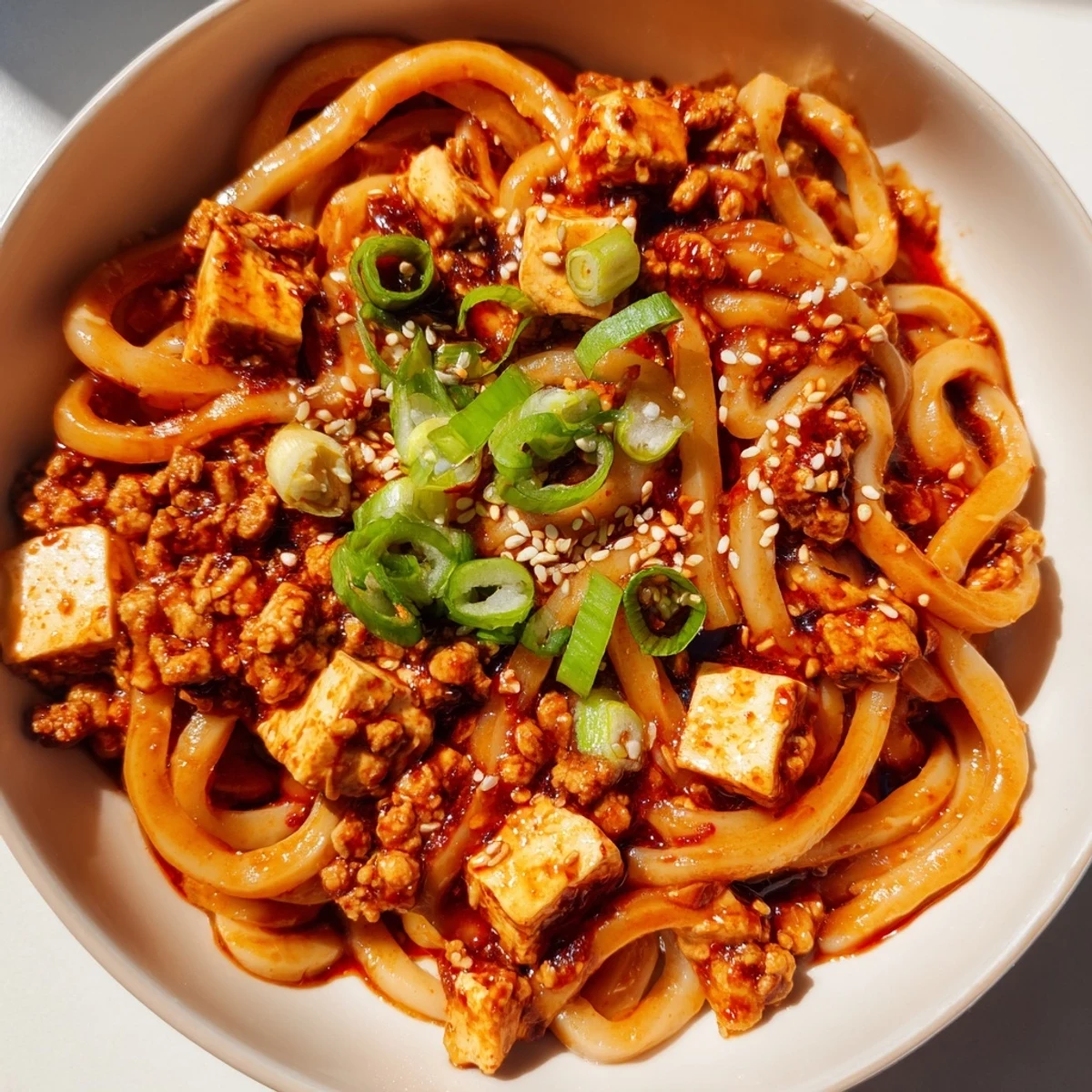
 This bowl marries the numbing heat of Sichuan mapo tofu with springy Japanese udon for a satisfying meal. Silky tofu and savory pork simmer in a fragrant sauce made with fermented chili bean paste, aromatics, and Sichuan peppercorns. The thick, glossy coating clings beautifully to each chewy noodle strand. Ready in just over half an hour, this fusion dish works perfectly for weeknight dinners when you're craving something spicy and comforting. Adjust the heat level by varying the doubanjiang or add chili oil at the end.
Rain was drumming against my apartment window when I first threw together this unlikely marriage of Sichuan heat and Japanese comfort. I had leftover mapo tofu sauce bubbling away and a package of fresh udon staring at me from the counter, so I took a chance. The way those thick, chewy noodles caught onto that spicy, numbing sauce changed my entire weeknight dinner rotation.
My roommate walked in mid cooking and immediately demanded a bowl. Now whenever either of us has a rough day, we text each other two words: mapo udon. It is become our rainy season ritual, the kind of meal that makes you forget everything else while you are eating it.
Ingredients
- Soft tofu: The silken texture melts into the sauce while still holding its shape, creating these creamy pockets that contrast beautifully with the chewy noodles
- Ground pork or plant-based mince: This adds savory depth and substance, creating those crumbles that catch all the sauce in every bite
- Fresh udon noodles: Their thick, springy texture stands up perfectly to the bold sauce and provides that satisfying slurp factor
- Sichuan peppercorns: Toasting them in oil first releases that signature numbing fragrance that makes this dish unmistakably Sichuan
- Doubanjiang: This fermented chili bean paste is the soul of the dish, giving that deep, complex heat and umami foundation
- Cornstarch slurry: Essential for achieving that glossy, velvety sauce consistency that clings to every strand of udon
Instructions
- Prep your station:
- Cube your tofu carefully, mince the garlic and ginger, slice those spring onions keeping whites and greens separate, and get your water boiling for the noodles before you turn on any heat
- Infuse the oil:
- Heat your oil in a wok or large skillet over medium heat, toss in those Sichuan peppercorns, and let them toast until your kitchen fills with that citrusy, numbing aroma about 30 seconds
- Build your aromatics:
- Fish out the peppercorns if you prefer less heat, then add garlic, ginger, and the white parts of your spring onions, stirring constantly until fragrant
- Brown your protein:
- Crank the heat to medium high, add your ground pork or plant-based mince, and break it into small crumbles as it cooks through completely
- Activate the paste:
- Stir in your doubanjiang and let it cook for a minute or two until the oil turns a brilliant red and that fermented aroma deepens
- Season the sauce:
- Pour in soy sauce, oyster sauce or mushroom sauce, Shaoxing wine, and sugar, mixing everything until the pork is evenly coated
- Add tofu and broth:
- Gently slide in those tofu cubes, pour in your broth, and let everything simmer for about 5 minutes while occasionally spooning sauce over the top
- Thicken to perfection:
- Stir in your cornstarch slurry and let it bubble for another 2 to 3 minutes until the sauce transforms into that gorgeous glossy consistency
- Cook the noodles:
- Drop your udon into boiling water and cook according to the package, usually just a few minutes for fresh noodles, then drain well
- Bring it all together:
- Divide noodles among bowls, ladle that spicy mapo tofu generously over the top, and finish with green onions, sesame seeds, and a drizzle of chili oil
 Pin It
 Last winter during a snowed in weekend, I made a triple batch and we ate it for three days straight. By day three, the flavors had melded into something even more incredible than day one.
Getting the Sauce Right
The key is letting doubanjiang bloom in hot oil before adding liquids. This step develops those fermented, toasty notes that define authentic mapo flavor. Do not rush this stage even if you are hungry.
Noodle Timing Secrets
Start boiling water when you begin making the sauce, not before. Udon cooks in just 2 to 3 minutes, and you want them ready the moment your mapo tofu finishes simmering. Nothing sadder than perfectly saucy mapo with overcooked, mushy noodles.
Make It Your Own
Once you have the base technique down, this dish welcomes endless variation. Adjust heat levels, switch proteins, or add vegetables based on what is in your fridge.
- Add bok choy or spinach during the last 2 minutes of simmering for extra vegetables
- Top with a crispy fried egg for richness that cuts through the spice
- Stir in a pat of butter at the very end for unexpected creaminess
 Pin It
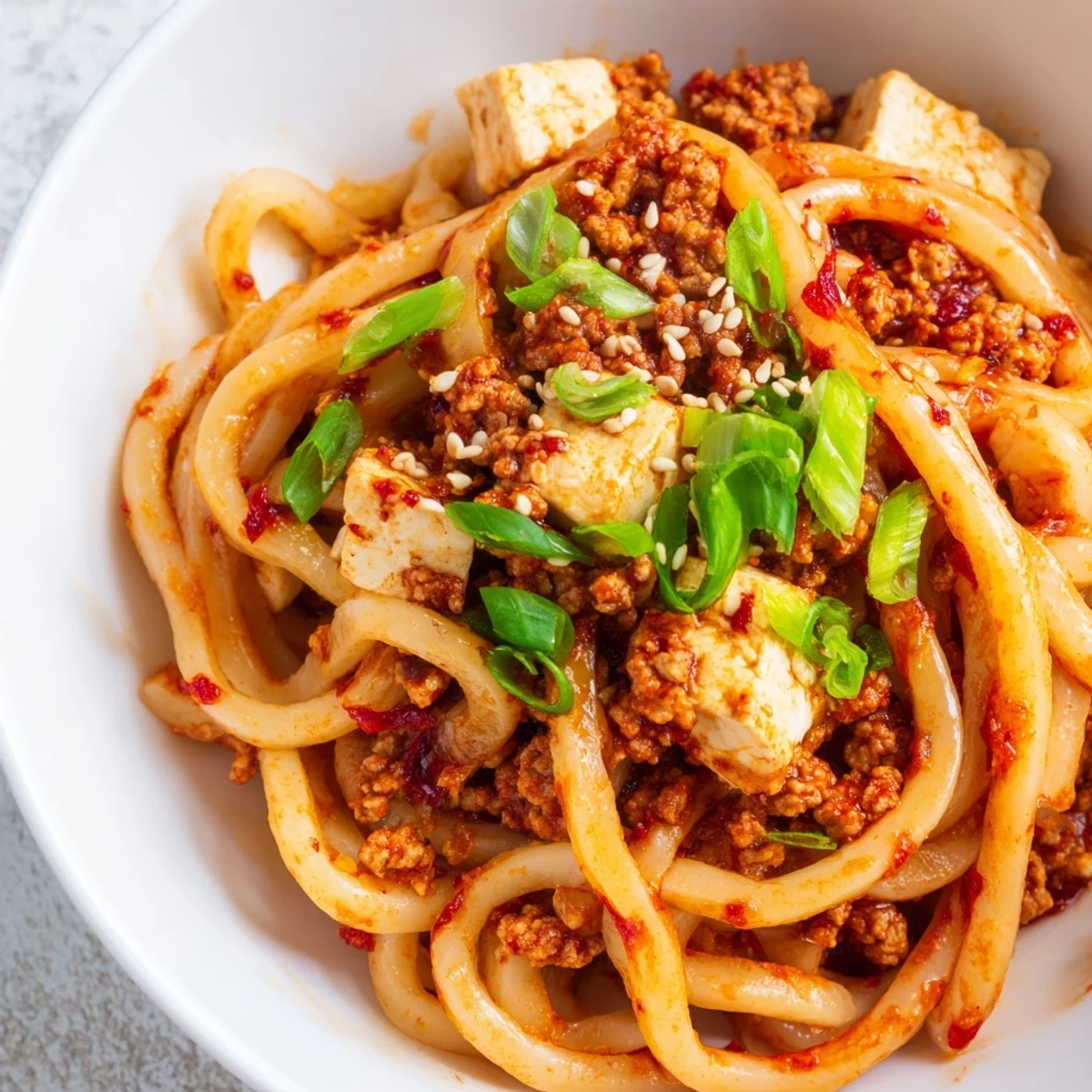
 There is something magical about the way steam rises from this bowl, carrying that numbing, spicy fragrance through the whole house. Hope it becomes your comfort too.
Recipe Questions
- → Can I make this vegetarian or vegan?
-
Yes, substitute ground pork with plant-based mince and swap oyster sauce for mushroom sauce. Use vegetable broth instead of chicken broth. The result remains just as satisfying and flavorful.
- → How spicy is this dish?
-
The heat level is medium to high, depending on how much doubanjiang you use. You can control the spice by reducing the fermented chili paste or omitting the optional chili oil garnish.
- → Can I use other noodles besides udon?
-
Thick wheat noodles like ramen or even egg noodles work well. For gluten-free options, use rice noodles or buckwheat soba, though the texture will differ from traditional udon.
- → What does Sichuan peppercorn add?
-
Sichuan peppercorns provide a unique numbing sensation called mala that complements the heat. Toasting them briefly in oil releases their citrusy, floral aroma before infusing the entire dish.
- → How do I prevent tofu from breaking apart?
-
Handle tofu gently when adding to the pan. Use a spatula to fold rather than stir vigorously. Simmering instead of boiling helps maintain the cubes' shape while they absorb the sauce.
- → Can I prepare components ahead?
-
Cube the tofu and prepare the sauce ingredients in advance. Cook everything just before serving, as udon noodles are best freshly cooked and the sauce is most fragrant when made right before eating.