
 Pin It
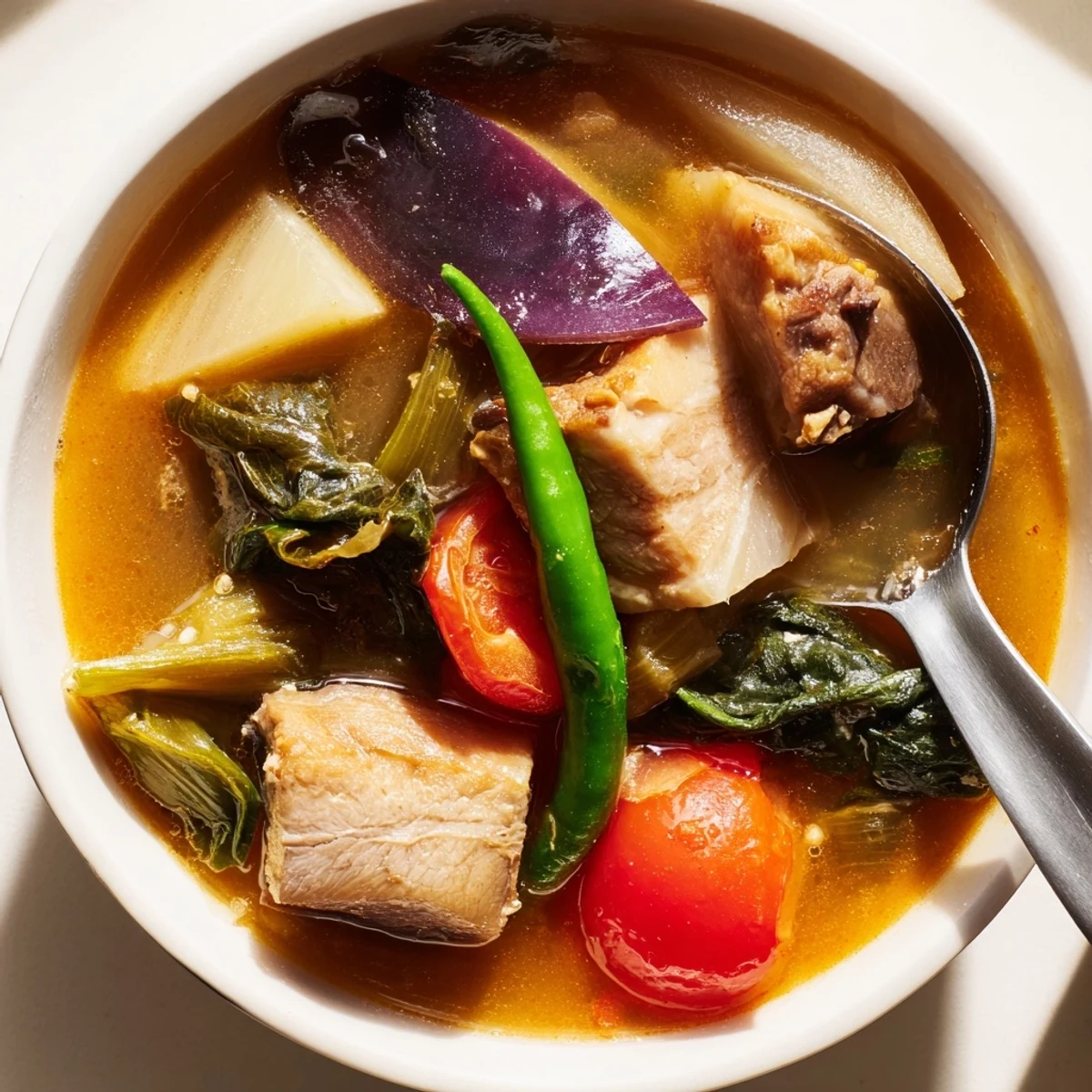
 This classic Filipino comfort dish features a perfectly balanced sour broth from tamarind, tender pork that simmers to perfection, and colorful vegetables added in stages for optimal texture. The tangy, savory flavors develop through careful timing, with each vegetable adding its unique character to the soup. Serve piping hot over steamed white rice for the ultimate warming meal on rainy days.
That first spoonful of Sinigang hit my tongue like a lightning bolt of sourness. I was sitting at my tita's kitchen table in Manila, rain pattering against the windows, steam rising from the earthen bowl. She laughed watching my face pucker up. Now it is the taste that pulls me home whenever the weather turns gray.
Last December I made a giant pot for my roommates during finals week. The apartment filled with that unmistakable tangy aroma. Everyone emerged from their rooms asking what smelled so incredible. We ate huddled around the coffee table, rice bowls in hand, forgetting about exams for an hour.
Ingredients
- 1 kg pork belly or ribs: I have used both and honestly the ribs give more flavor but belly stays juicier in the broth
- 2 medium tomatoes: Quarter these generousy they break down and thicken your soup naturally
- 1 large onion: Quartered so it holds shape while infusing sweetness into the broth
- 1 daikon radish: Peel and slice into half moons this adds crunch and mild sweetness
- 10 string beans: Trim then cut into 2 inch pieces they stay snappy if you do not overcook
- 1 eggplant: Slice into rounds it absorbs all that delicious sour broth
- 2 cups spinach or kangkong: Add this last so it stays bright and fresh not mushy
- 2 long green chili peppers: Optional but I love the gentle heat they sneak in
- 1 packet tamarind soup base: The shortcut version saves so much time though fresh tamarind is worth seeking out
- 2 tbsp fish sauce: This is your salt source so taste before adding extra
- 6 cups water: Start with this and add more if you prefer a thinner broth
Instructions
- Get your broth going:
- Bring water to boil in your biggest pot then add pork chunks. Skim off the grey foam that floats up it makes for clearer soup.
- Build the foundation:
- Toss in tomatoes and onion. Let them simmer for 20 minutes until the pork starts yielding when you poke it.
- Add the hard vegetables:
- Drop in daikon slices and cook another 10 minutes. Test a piece it should be tender but still hold its shape.
- Bring in the rest:
- Add eggplant string beans and chilies if using. Simmer 5 minutes then stir in your tamarind base.
- Season properly:
- Add fish sauce salt and pepper. Taste the broth and adjust because every tamarind brand has different intensity.
- Finish with greens:
- Drop in spinach last and wait just 2 to 3 minutes until they wilt. Serve immediately over steaming rice.
 Pin It
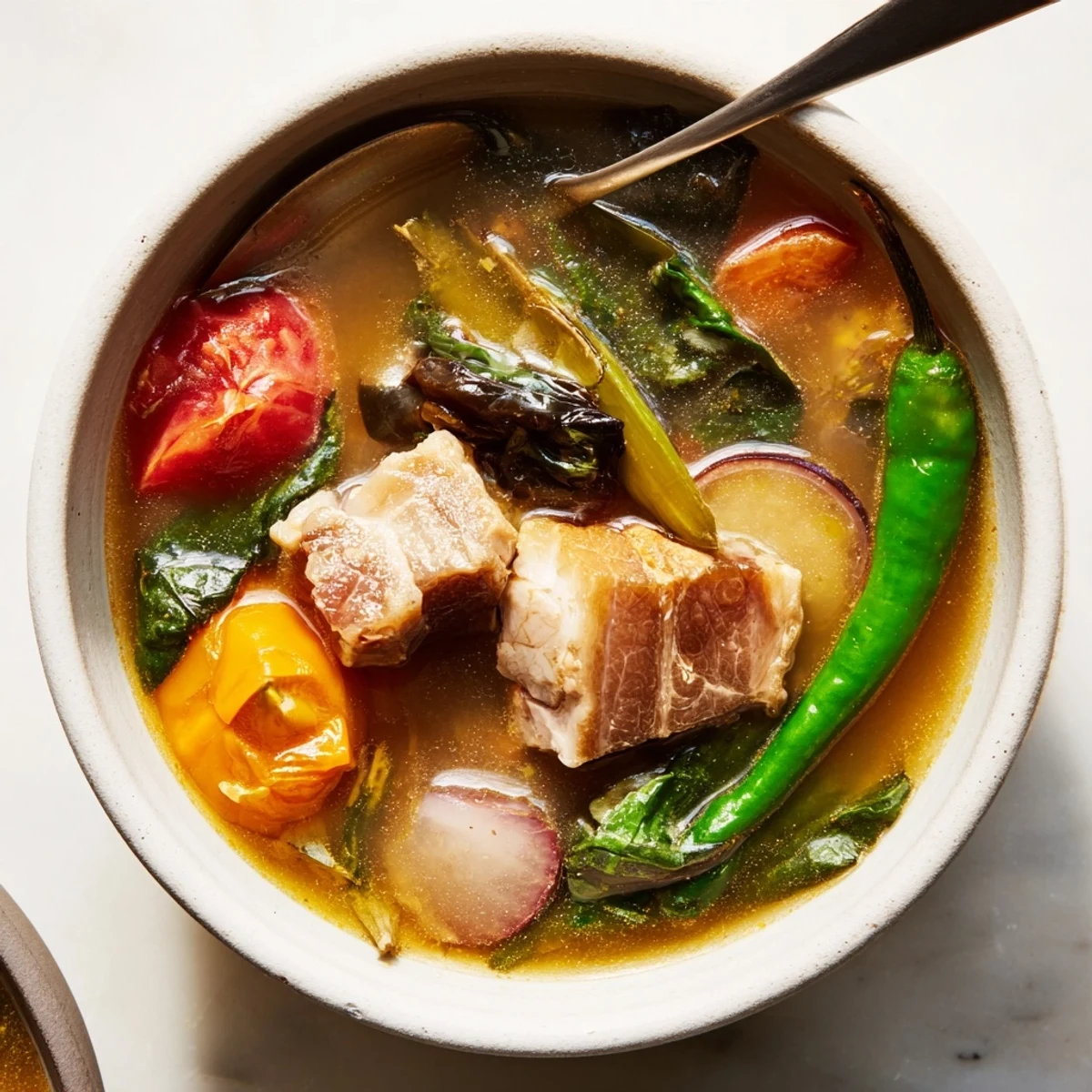
 My boyfriend who claims to hate sour food asked for seconds. Then thirds. Something about the balance of sour savory and just a little heat just works. Now he requests it whenever he has a cold.
Choosing Your Protein
Pork is traditional but shrimp turns this into something elegant and quick. I have made it with salmon fillets too just drop them in during the last five minutes. Fish versions feel lighter somehow perfect for summer dinners.
The Sour Factor
Fresh tamarind requires boiling mashing and straining which takes an extra twenty minutes. The packet mix works beautifully for weeknights. Sometimes I use half fresh half mix to get the best of both worlds.
Vegetable Swaps
Okra ladies fingers works wonderfully here especially if you love that slightly thickened texture. Taro chunks add heft and absorb flavor. My aunt adds banana heart blossoms when they are in season giving it a slight bitterness that cuts through the rich pork.
- Cut eggplant just before cooking so it does not brown
- String beans should snap when you bend them
- Spinach wilts faster than kangkong so adjust timing accordingly
 Pin It
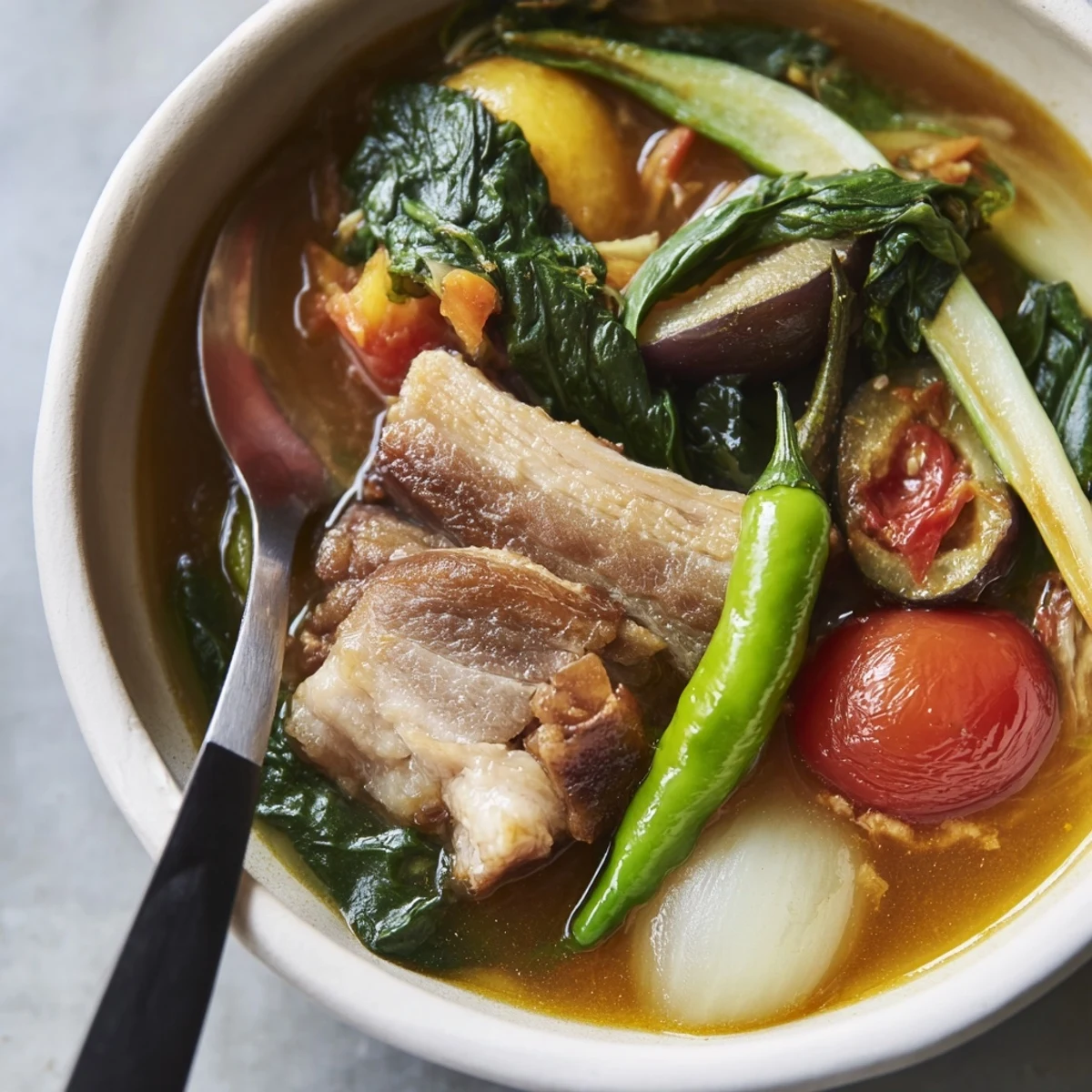
 Warm spicy comforting everything good soup should be. Hope it becomes part of your rainy day repertoire too.
Recipe Questions
- → What makes Sinigang taste sour?
-
The signature sourness comes from tamarind, which creates that distinctive tangy flavor. You can use fresh tamarind pulp boiled and strained, or convenience tamarind soup base mix found in Asian markets.
- → Can I make Sinigang with other proteins?
-
Absolutely! While pork belly or ribs are traditional, you can substitute with beef, shrimp, or fish. Seafood versions are lighter and add the protein during the last 10 minutes to prevent overcooking.
- → What vegetables go best in Sinigang?
-
Classic additions include daikon radish, eggplant, string beans, tomatoes, onions, and leafy greens like spinach or kangkong (water spinach). You can also add okra or taro based on preference and availability.
- → How do I adjust the sourness level?
-
Start with the recommended amount of tamarind, then taste before adding the leafy greens. You can add more tamarind mix for extra sourness or balance with additional salt and a pinch of sugar if needed.
- → What should I serve with Sinigang?
-
Steamed white rice is the traditional accompaniment, perfect for soaking up the flavorful broth. The soup also pairs wonderfully with a chilled glass of Sauvignon Blanc to complement the tangy notes.