 Pin It
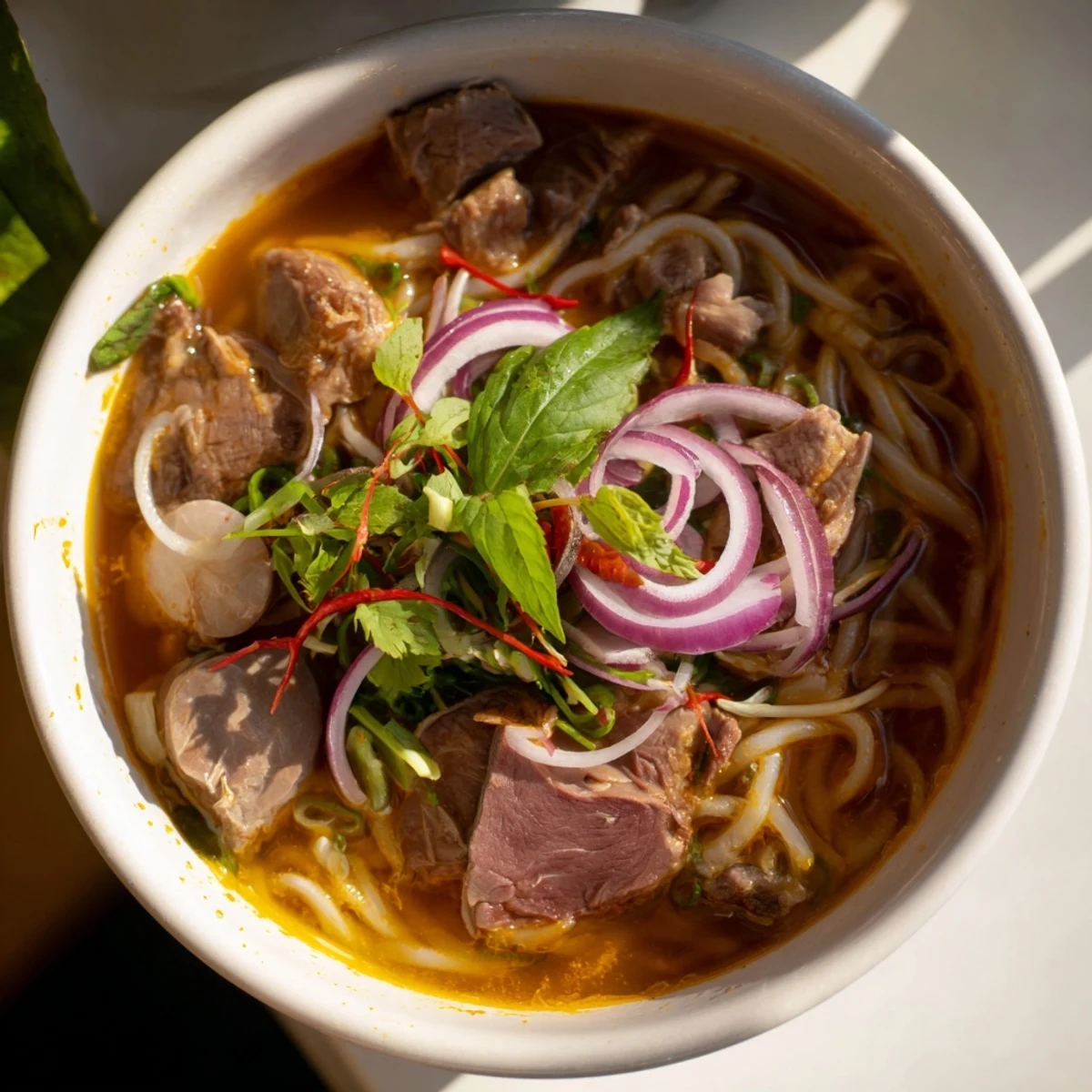
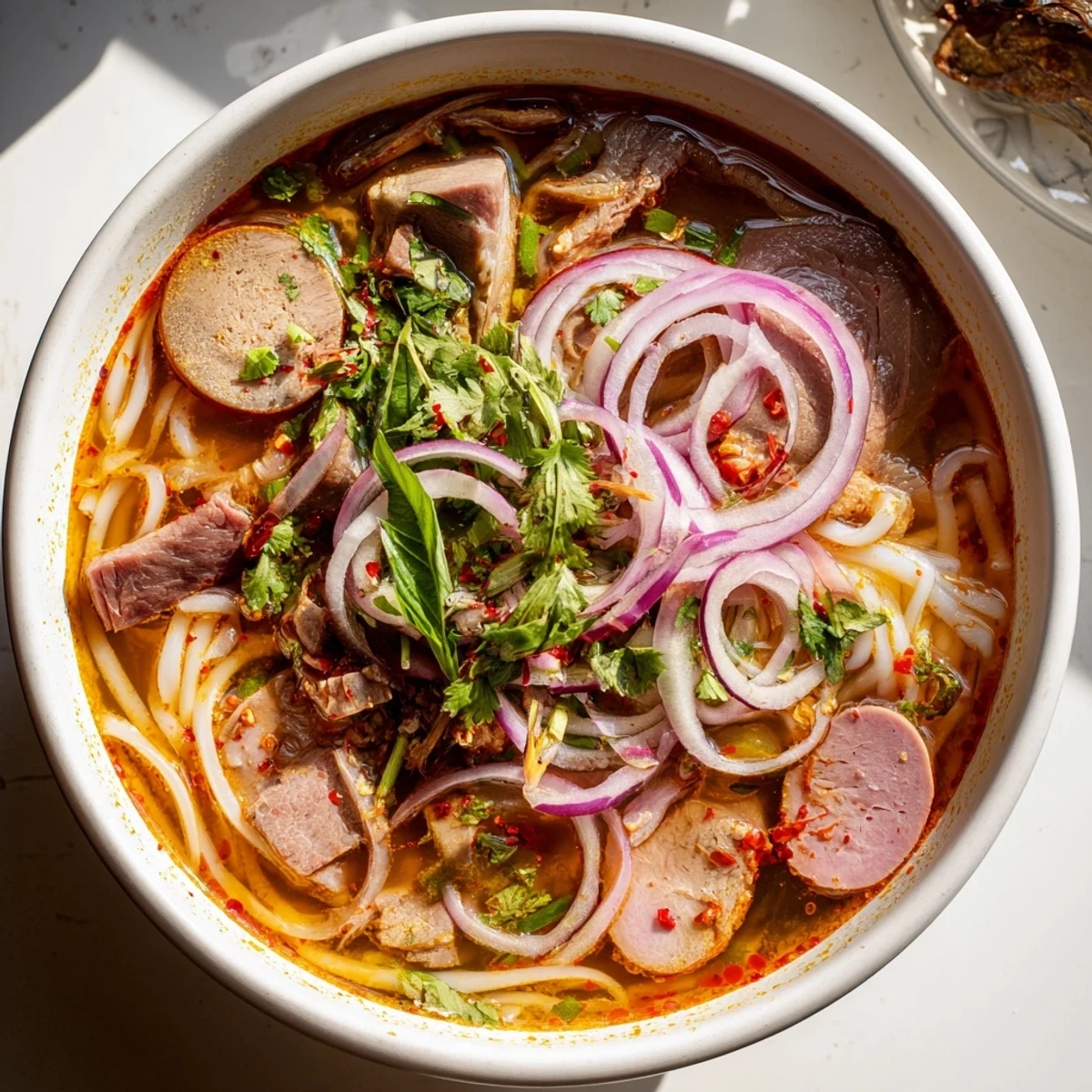
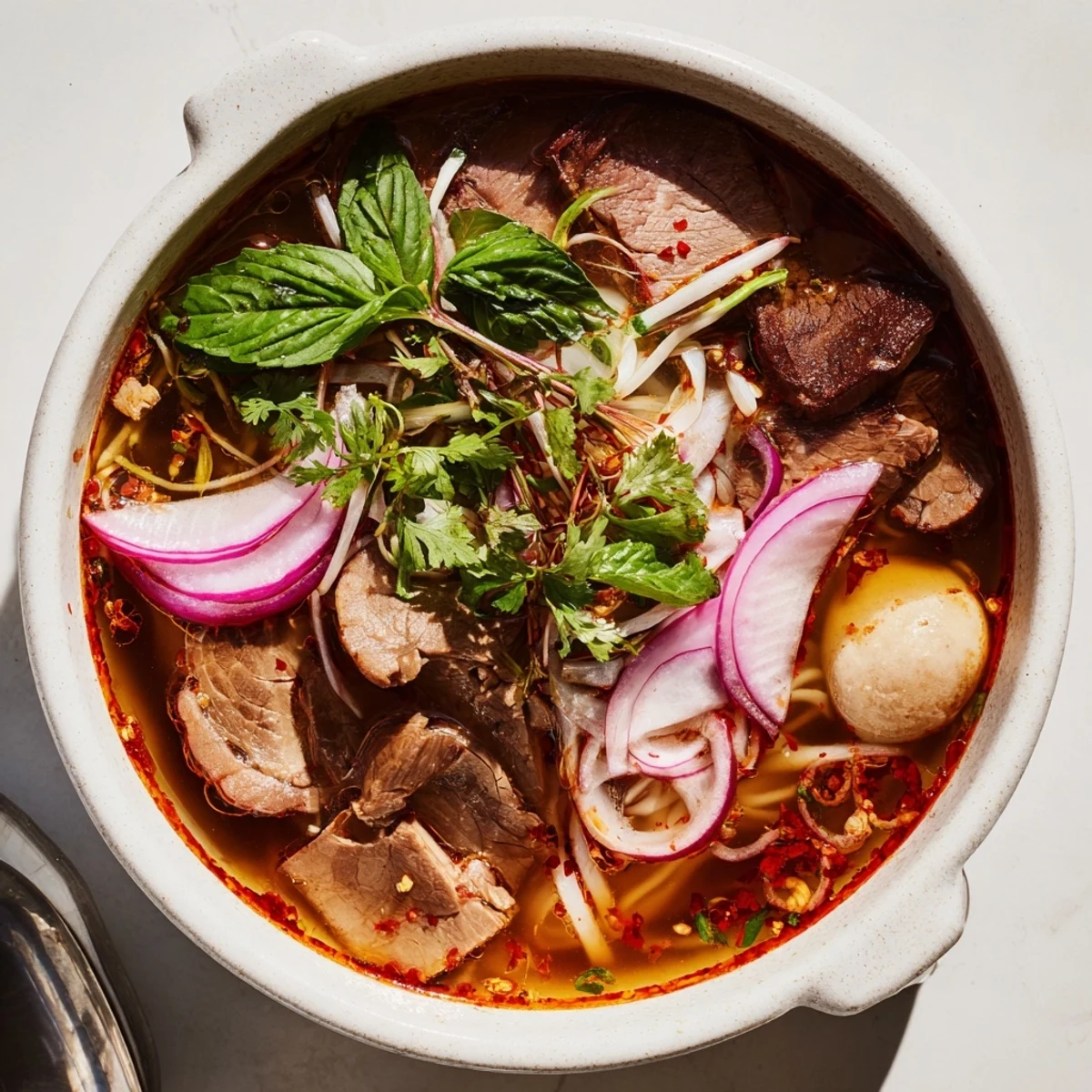
 Bun Bo Hue delivers a complex, spicy-sweet broth featuring the signature perfume of bruised lemongrass and shrimp paste. The lengthy simmering process extracts deep flavors from beef shank and pork hock, resulting in a reddish-orange soup infused with aromatic chili oil. Thick round rice noodles provide the perfect vessel for this hearty bowl, topped with sliced beef brisket, tender pork hock, optional blood cubes, and Vietnamese sausage. Fresh herbs like Thai basil, mint, and cilantro add brightness, while lime wedges offer a tangy finish to balance the intense heat.
The first time I had Bun Bo Hue was at a tiny Vietnamese restaurant in Saigon, where the owner kept a small pot of chili oil on every table. The broth had this incredible depth that made me stop eating and just breathe in the steam. I spent months trying to recreate that spicy, lemongrass-forward flavor in my own kitchen, failing repeatedly until a Vietnamese friend showed me the secret was in the shrimp paste and annatto oil.
Last winter, I made a massive batch for my family during a particularly gray week. My normally spice-averse brother went back for thirds, adding more chili oil each time until he was sweating and grinning. The house smelled like lemongrass and toasted garlic for days afterward.
Ingredients
- Beef shank and pork hock: These bone in cuts create the rich foundation, so do not skip them or substitute with boneless meat
- Lemongrass: Bruise the stalks with a heavy knife to release their citrusy oils into the broth
- Shrimp paste: This funky ingredient is non negotiable for authentic depth, but add it gradually to taste
- Annatto seeds: They give the broth that signature red orange hue without adding extra heat
- Thick rice noodles: Look for the round bun bo Hue noodles, not the flat ones used for pho
Instructions
- Build your broth foundation:
- Bring the meat to a boil, drain and rinse it to remove any scum, then refill with clean water and aromatics. Skim the surface as it simmers to keep the broth clear and clean tasting.
- Create the aromatic chili oil:
- Infuse your oil with annatto seeds until red, then saute shallots and garlic until golden before stirring in the chili flakes. This oil will be the soul of your soup.
- Prepare your proteins:
- Cook the noodles according to package directions and slice all your meats thinly against the grain. Simmer the blood cubes gently if you are using them.
- Assemble each bowl:
- Layer noodles first, then arrange the meats on top before ladling the steaming broth over everything. Finish with that red chili oil you made earlier.
- Add the finishing touches:
- Let everyone customize their bowl with fresh herbs, bean sprouts, lime wedges, and extra chili slices at the table.
 Pin It
 This soup has become my go to for feeding a crowd because everything can be prepared ahead and the broth actually tastes better the next day. Watching friends hunch over their bowls, breathing in the steam, is one of my favorite dinner party moments.
The Art of Broth Balance
Taste your broth after the first hour of simmering and adjust the seasoning then, not just at the end. The flavors concentrate as it reduces, so what seems mild early on will intensify. I keep a small bowl of the broth in the fridge to taste as it cools because that is when you can really judge if the balance is right.
Making It Your Own
Some days I add a piece of pineapple to the broth for subtle sweetness, especially when the lemongrass seems especially sharp. Other times I will throw in dried shrimp if I want more umami depth. The beauty of this soup is how it welcomes small tweaks while remaining recognizably itself.
Serving It Right
Put all the garnishes out in separate bowls so people can build their own perfect version. I have learned that some guests want mountains of herbs while others prefer just a sprinkle. The soup should arrive at the table piping hot, with the chili oil within easy reach for anyone who wants to turn up the heat.
- Keep some extra lime wedges handy
- Have a jar of chili flakes on the table
- Never skip the fresh herbs
 Pin It
 There is something deeply satisfying about making a soup that demands this much time and care, then watching people fall silent over their bowls because the first bite is just that good.
Recipe Questions
- → What makes Bun Bo Hue different from pho?
-
Bun Bo Hue originates from central Vietnam and features a spicier, more complex broth with lemongrass, shrimp paste, and chili oil. The noodles are thicker and rounder than pho's flat rice noodles, and the soup typically includes pork hock and sometimes blood cubes for a richer, bolder flavor profile.
- → Is shrimp paste essential for authentic flavor?
-
Yes, shrimp paste (mam ruoc) provides the distinctive umami depth that defines Hue-style cuisine. While it has a strong smell initially, cooking it in the broth mellows the aroma and contributes essential savory notes. Fish sauce alone cannot replicate this traditional flavor.
- → Can I make the broth ahead of time?
-
Absolutely. The broth actually improves after resting overnight in the refrigerator, allowing flavors to meld. Store broth and cooked meats separately. Before serving, skim off solidified fat, reheat the broth, and slice the meats. You can also freeze broth for up to 3 months.
- → Where can I find thick rice noodles?
-
Look for bun bo Hue noodles specifically labeled as thick round rice noodles at Asian grocery stores. Some markets carry them fresh in the refrigerated section. Dried versions work well too—just soak according to package directions before boiling. Regular banh pho noodles are not ideal substitutes due to different texture.
- → How do I adjust the spice level?
-
Control heat through the aromatic chili oil. Start with less chili flakes when preparing the oil, and add more gradually when serving. Fresh bird's eye chili slices at the table allow diners to customize individual bowls. For mild versions, reduce chili flakes by half and serve oil on the side.
- → What can substitute for annatto seeds?
-
Annatto seeds primarily provide the signature reddish-orange color rather than significant flavor. If unavailable, a pinch of paprika or turmeric can achieve similar hue. Some cooks skip it entirely—the chili oil also contributes color. Avoid artificial food coloring for authentic appearance.